Massage License Requirements in North Carolina
Verified against North Carolina Board of Massage and Bodywork Therapy · 2026-07-24 · verified by agent
North Carolina's 650-hour training requirement is sourced from N.C. Gen. Stat. Chapter 90, Article 36 — Massage and Bodywork Therapy Practice Act, verified 2026-07-24. Its required exam — MBLEx (Massage & Bodywork Licensing Examination) — comes from the same source.
Compiled and verified against primary state-board sources by GetMassageLicense — cite-or-deny, with no invented figures. How we source & verify →
North Carolina requires a statewide license to practice massage and bodywork therapy, administered by the North Carolina Board of Massage and Bodywork Therapy under the Massage and Bodywork Therapy Practice Act (N.C. Gen. Stat. Chapter 90, Article 36). Applicants must complete a minimum of 650 classroom hours at a Board-approved school, pass a Board-approved competency exam (MBLEx is explicitly recognized, alongside NCBTMB-family alternatives), and pass a criminal background check, receiving the title Licensed Massage and Bodywork Therapist (LMBT). The license renews every two years with 24 hours of continuing education, including at least 3 hours specifically in professional ethics, and counties/municipalities retain authority to impose their own consistent regulation on top of the state license.
North Carolina Massage License Requirements
| Licensing Authority | North Carolina Board of Massage and Bodywork Therapy |
| Title | LMBT |
| Training Hours | 650 hours — Board-approved school (in NC or elsewhere); NC community-college programs accredited by SACS, and college/university programs accredited by a USDE-recognized agency and licensed by the NC Community College System or UNC Board of Governors, are exempt from separate Board approval but their graduates still qualify for licensure |
| Exam | MBLEx (Massage & Bodywork Licensing Examination) (Federation of State Massage Therapy Boards (FSMTB)) Alternatives accepted: NCETMB (NCBTMB); NCETM (NCBTMB); ABTE (NCCAOM) |
| Renewal Period | 2 years |
Fee Breakdown
| Application Fee | $20 |
| Initial License Fee | $150 |
| Renewal Fee (every 2 years) | $100 |
Related & additional fees
Separate or situational costs — not part of the standard initial application.
| Late renewal penalty | $75 |
| Duplicate license | $25 |
| SBI Criminal History Report | $40 |
Recommended MBLEx exam prep
Formal prep pays for itself against a $265 retake. These are the resources we point candidates to for the MBLEx (Massage & Bodywork Licensing Examination). Read the full MBLEx exam-prep guide for what the exam covers, what it costs, and how to schedule it.
Some links below are affiliate links. If you buy through them we may earn a commission at no extra cost to you.
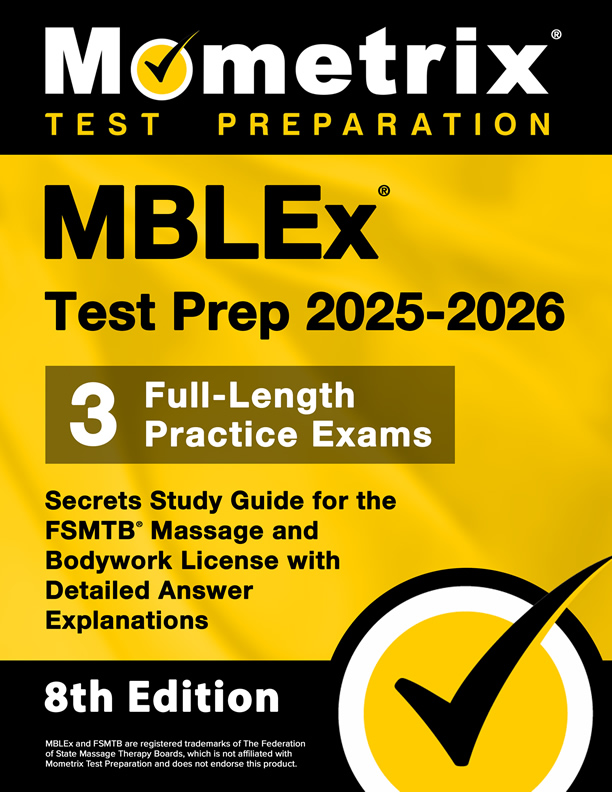 Mometrix · SponsoredMBLEx Secrets Study GuideFull-length practice tests and step-by-step review for the Massage & Bodywork Licensing Examination.See the study guide →
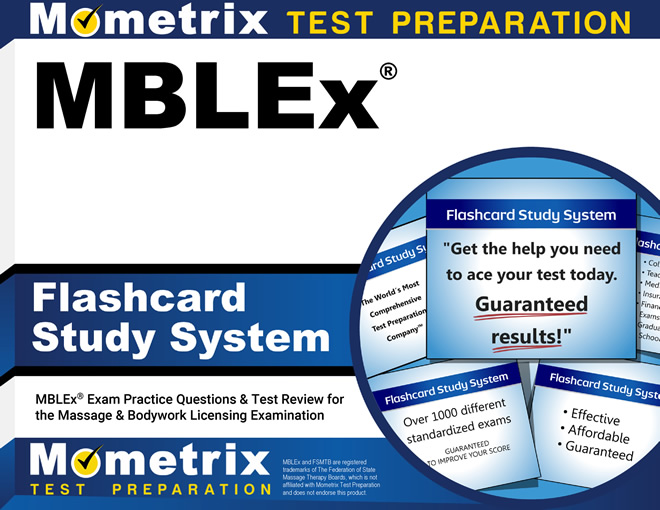 Mometrix · SponsoredMBLEx FlashcardsPortable flashcards covering the MBLEx's high-frequency topics — a cheaper add-on for drilling terms and definitions on the go.See the flashcards →
 Mometrix · SponsoredMBLEx Online Prep CourseA guided video course with instructor-led lessons, quizzes, and a study plan for the MBLEx — a subscription option for a more structured review.See the course →
Continuing Education
24 hours every 2 years, including 3 ethics hours.
21 NCAC 30 .0701(c) requires 24 hours of continuing education per 2-year renewal period (12 hours if the initial licensure period was between 1–2 years), including at least 3 contact hours specifically in professional ethics. Distance learning may not exceed 12 hours (6 for a shorter period) of the total, and business management may not exceed 8 hours. Beginning with the renewal period ending Dec. 31, 2024, a minimum of 12 hours must be completed in-classroom, per the Board's CE Requirements page.
Starting your own practice in North Carolina?
Working for yourself usually means a business entity. An LLC keeps your personal assets separate from the practice and is the name your business bank account, lease and liability policy go under. Northwest forms it and acts as your registered agent in North Carolina — a flat fee, no upsell funnel.
Some links below are affiliate links. If you buy through them we may earn a commission at no extra cost to you.
Form an LLC with Northwest →Licensure by Endorsement
Governed by N.C. Gen. Stat. §90-630.1 (the older NCAC reciprocity rule was repealed effective Dec. 1, 2009). Two pathways: (a) applicants from a jurisdiction that licenses/certifies/registers massage therapists must meet NC's base qualifications, hold a current credential in good standing from a jurisdiction with substantially equivalent or higher standards, have no pending disciplinary action, pass the Board's jurisprudence exam, and demonstrate English proficiency if foreign-credentialed; (b) applicants from a jurisdiction with no such credentialing system must meet the same base qualifications, pass a Board-approved competency exam, have graduated from a school with a curriculum substantially equivalent to NC's and properly licensed/approved (or exempt) in its home jurisdiction, and also pass the jurisprudence exam. The Board maintains a list of jurisdictions determined to have substantially equivalent standards.
Local & City Requirements
N.C. Gen. Stat. §90-636 ('Regulation by county or municipality') states: 'Nothing in this Article shall be construed to prohibit a county or municipality from regulating persons covered by this Article, however, a county or municipality may not impose regulations that are inconsistent with this Article.' So counties/cities may add their own regulation as long as it doesn't conflict with the state Practice Act.
Sources
- N.C. Gen. Stat. Chapter 90, Article 36 — Massage and Bodywork Therapy Practice Act
- 21 NCAC Chapter 30 — Board of Massage and Bodywork Therapy Rules and Regulations (rev. Feb 1, 2025)
- NC Board of Massage and Bodywork Therapy — Fee Schedule
- NC Board of Massage and Bodywork Therapy — CE Requirements
- NC Board of Massage and Bodywork Therapy — Licensure Info
- NC Board of Massage and Bodywork Therapy — homepage / contact
Data last verified: 2026-07-24 (verified by: agent) | Source: N.C. Gen. Stat. Chapter 90, Article 36 — Massage and Bodywork Therapy Practice Act